Matthew 15:21–28
She didn’t belong.
By every social, religious, and cultural standard of her day, she was an outsider.
A Gentile. A woman. A desperate mother whose only hope was a Jewish rabbi who didn’t seem to notice her cries.
But desperation has a way of silencing pride.
And this mother — unnamed but unforgettable — teaches us what great faith really looks like.
1. A Mother Who Wouldn’t Give Up
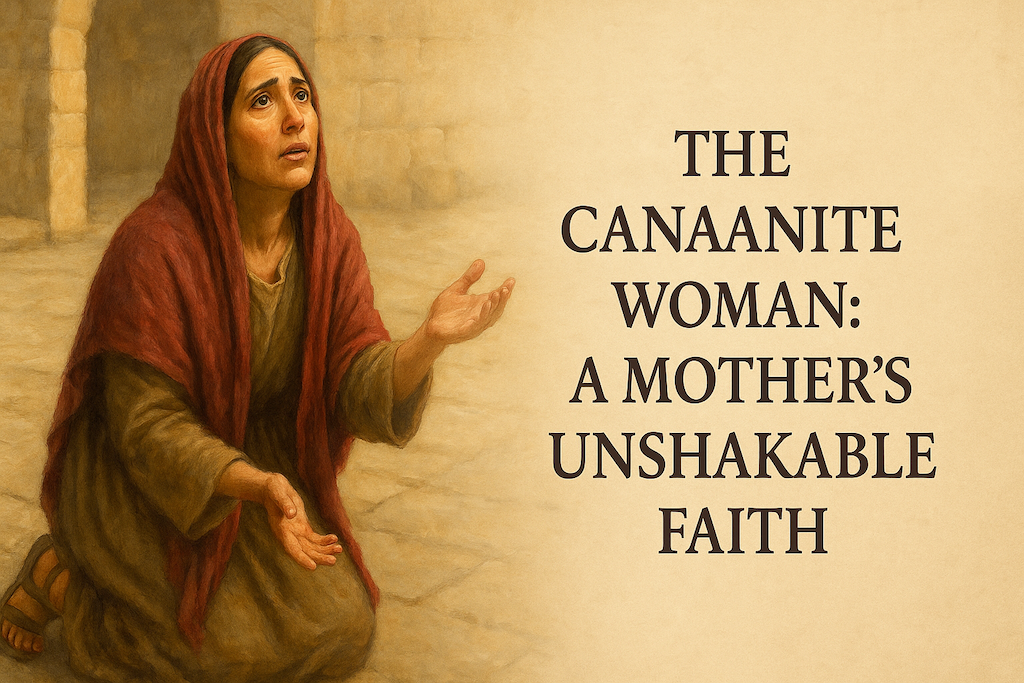
Matthew tells us that Jesus had withdrawn to the region of Tyre and Sidon — Gentile territory. It was foreign soil, and it’s here that this unnamed Canaanite woman approaches Him, crying:
“Lord, Son of David, have mercy on me! My daughter is demon-possessed and suffering terribly.” (Matthew 15:22)
What strikes us first is her courage. She’s not Jewish, yet she calls Him “Son of David.” That title means Messiah.
Somehow, this outsider recognized what so many insiders missed: Jesus was more than a miracle worker — He was the long-awaited Savior.
But at first… He says nothing.
“Jesus did not answer a word.” (v.23)
Can you imagine her heartbreak? Her child is suffering, her heart is breaking, and heaven seems silent.
Yet she doesn’t walk away.
Her love won’t let her.
2. When God Seems Silent
Many of us have been there — praying, pleading, waiting, wondering why God seems quiet.
This woman’s story reminds us that sometimes, God’s silence isn’t rejection; it’s invitation.
It’s a space where faith is refined, where motives are tested, where trust deepens.
She could have turned away in anger or embarrassment.
But she stayed. She kept crying out.
Faith doesn’t stop at silence — it presses in harder.
“The disciples came to him and urged him, ‘Send her away, for she keeps crying out after us.’” (v.23)
Even the disciples were uncomfortable with her persistence. But she wasn’t there to impress them — she was there to reach Jesus.
3. The Test of Faith
When Jesus finally speaks, His words sound hard:
“I was sent only to the lost sheep of Israel.” (v.24)
And still she kneels before Him, saying:
“Lord, help me.” (v.25)
That’s one of the most powerful prayers in Scripture — short, raw, and sincere. No eloquence, no performance, no bargaining. Just the cry of a heart that refuses to give up on God.
Then comes the hardest test yet:
“It is not right to take the children’s bread and toss it to the dogs.” (v.26)
At first, that sounds harsh — but Jesus was using a common cultural saying to draw something deeper out of her.
The word for “dogs” here actually means little dogs — household pets, not strays.
He’s testing her humility.
Would she be offended? Would she turn away?
Or would she keep believing in His goodness even when His words stung?
4. Humility That Disarms Heaven
Her response is breathtaking:
“Yes it is, Lord. Even the dogs eat the crumbs that fall from their master’s table.” (v.27)
She doesn’t argue. She doesn’t take offense.
She simply says, “I’ll take whatever You’ll give me — because even a crumb from You is enough.”
And in that moment, the heart of Jesus melts.
“Woman, you have great faith! Your request is granted.” (v.28)
Her daughter was healed instantly.
Heaven moved — not because she shouted louder, but because she believed deeper.
5. Why Jesus Called It “Great Faith”
Notice that Jesus only said two people in all the Gospels had great faith — a Roman centurion (Matthew 8:10) and this Canaanite woman.
Both were outsiders.
Both believed without entitlement.
Both recognized His authority.
Her faith was “great” because:
- She believed even when God was silent.
- She trusted His heart even when His words tested her.
- She refused to give up even when the world told her she wasn’t worthy.
That’s what great faith looks like — not perfection, not power, but persistence rooted in humility.
6. The Heart of a Mother — The Heart of a Believer
Every mother who’s ever prayed through tears for her child can relate to her.
Every believer who’s ever felt unseen or unworthy can too.
This woman’s story reminds us:
Faith isn’t about deserving — it’s about trusting the One who does.
She didn’t bring credentials. She brought conviction.
She didn’t bring status. She brought surrender.
And Jesus called that “great faith.”
7. When Faith Feels Like Crawling for Crumbs
Sometimes faith doesn’t feel glamorous. It feels like crawling under the table, just hoping for crumbs.
But if those crumbs come from the hand of Christ — they’re enough to change everything.
So if you’re praying for something that feels impossible — a prodigal child, a failing marriage, a silent season — keep coming.
God’s delays are not His denials.
The silence isn’t rejection; it’s preparation.
He’s drawing your faith to the surface — refining, strengthening, deepening it.
Because the moment He speaks, everything changes.
💛 Reflection
The Canaanite woman’s story is proof that persistence moves the heart of God.
Faith doesn’t mean you never doubt — it means you don’t walk away.
It means you hold on even when heaven feels quiet.
She was an outsider who became a living picture of what it means to believe — not because she had all the right words, but because she knew who Jesus was.
“Even the dogs eat the crumbs that fall from their master’s table.”
And in those crumbs, she found the power of a miracle.
✨ A Prayer
Lord,
When You seem silent, teach me to keep coming.
When my prayers go unanswered, help me trust Your heart.
Let me be like this woman — humble, persistent, and full of faith.
Remind me that even a crumb from Your hand is enough to heal, restore, and redeem.
Amen.
🌸 Final Thought
Great faith isn’t loud — it’s steady.
It keeps knocking, keeps trusting, keeps believing that even the smallest act of God’s mercy is enough to make the impossible possible.
So, take heart. If you’re still praying, still believing, still coming — heaven sees you.
Jesus still stops for persistent hearts.